

TECHNOLOGY TRANSFER AND SUSTAINABLE ECONOMIC DEVELOPMENT
December 9, 2025
IMPERATIVES OF PATENTING TO SOCIO-ECONOMIC DEVELOPMENT
December 9, 2025
Nowadays, we live in an era of Information and Communication Technology (ICT) age whereby distance no longer pose a challenge and possibilities are emerging every day. When we look round our environment, we are away of technological display in every of our daily endeavour, new developments in technology.
This emerging growth of technology is not evenly distributed across the globe as the presence of technology are evidently everywhere in the developed Countries, same cannot be said of the developing Countries. While the developed Countries enjoy sophisticated technologically motivated transport systems that not only eases traffic within the cities, it also ensures limited cases if not zero auto crashes. Banking services in such technologically advances nations are smart to the point that their mobile phones have become their mini banking halls as they perform all kinds of banking activities in the comfort of their homes. The absence of technology or limited access to technology in developing countries is greatly reflecting on the quality of life of the people.
However, technology transfer has a great effect and enormous benefits to the economy and could be a dependable source of economic sustainability of developed nations through increased productivity, lowering cost, reducing poverty and enriching social activities. This is why technology transfer has been a major concern for many companies, institutions and government establishments. Although there is no doubt that developed countries have very strong and vibrant educational programmes that breed the highly skilled manpower through research and innovation that propels the production capacities of their industries.
Globally, no country is recognized without a highly standardized educational structure which has a robust interface with industry to address various challenges besieging the industry as it is a key element to sustainable economic development. Consequently, researches carried out in these countries are structured and tailored at solving identified industrial problems for improved performance by the production facilities and overall benefits of the country.
In countries like Japan, Germany, United States of America, UK etc, research and innovation centers churn out goods and services enough not only for local consumption but also have some of their products on export list.
This is because industries are linked to the academia with regular engagements in researches undertakings that are targeted at developing goods and services for economic development. Highly rated and renowned academic research scholars in these countries, turn out good number of patented inventions from research institutions which are further commercialized for economic benefits of both the researchers and their institutions.
These countries devote five to ten percent of their annual budget to research and development. Significant attention is also given to research not only by government but also privately owned companies and individuals through establishment of dedicated research funds to enable them carry out research works that would address critical challenges of the society.
In most developed countries, donor agencies and multinationals set aside funds to encourage researchers as a way of corporate social responsibility (CSR) and invite interested researchers to submit bankable research proposal and access the funds for the purposes of addressing specific societal challenges through their R&D results. A case study of such research funds established is the tetfund established by the United Kingdom to assist researchers in Tertiary and Research Institutions to access funds to carry out research in some areas militating against the health and development of the third world countries.
Aside the provision of research funds in such countries, government also provide enabling environment, academic infrastructure and world class laboratories that encourage research and learning for optimal results.
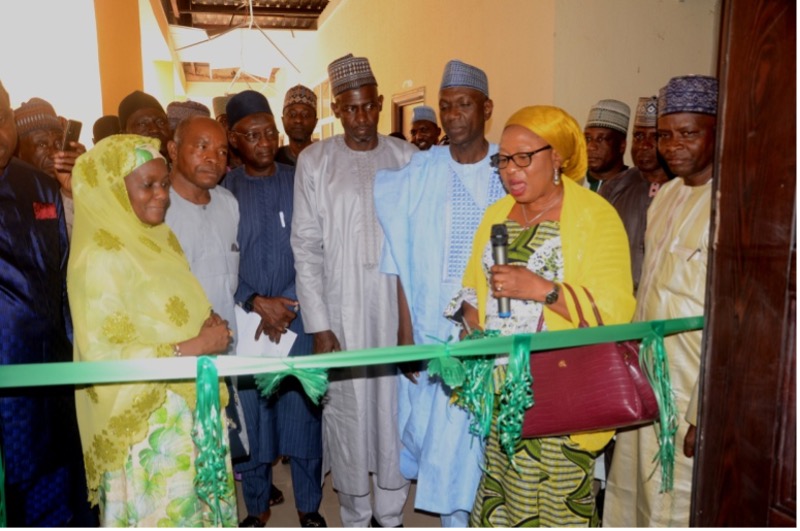
This is why the National Office for Technology Acquisition and Promotion (NOTAP) in collaboration with PZ Cussons Nigeria plc introduced Knowledge Institutions Laboratory Upgrade known as NOTAP-Industry Research Laboratory Upgrade in 2012 to help the research community by upgrading laboratories of some knowledge institutions to ensure that credible research results are obtained from such research facilities. NOTAP in carrying out its statutory responsibilities realized that most production companies in the Country carry out their laboratory analyses in their parent company abroad with the claim that there are no state-of-the art laboratory facilities in Nigeria. As a regulatory agency that registers the technology transfer agreements of every technology that enters the Country, The Management of NOTAP went into dialogue with some industries to commence the upgrading of research laboratories across the Country as part of their Corporate Social Responsibilities. This programme was aimed at ensuring that not only that those Nigerian researchers are provided with global standard research facilities, but it also curtails excessive pressure on foreign currency through ester codes and other sundry expenditures by the companies. This programme started with the upgrading of laboratories of three knowledge institutions in 2012 and 2013 thus: Upgrading of Chemical Laboratory at Modibo Adama University of Technology (MAUTECH), Yola Adamawa State, upgrading of Chemical laboratory at
This explains why institutions of higher learning in the developed countries can boast of four to five billion dollars revenue annually, emanating from the licensing of their inventions. University of Texas USA for instance, generates an average of One Billion dollars annually from royalties and licensing of Intellectual Property Right (IPR) accruing from its research efforts.
While the developed countries devote over four percent of their GDP to research and development activities, the developing countries such as Nigeria, Ghana, Mali, Libya and Burkinafaso devote less than one percent of their GDP to research works. No wonder in the global University ranking, no University from the above mentioned countries with low research funding is among the top two hundred Universities in the world ranking. This is the index of weakness and invisibility of Universities from the developing countries.
Also in the developed countries, the academia has good linkage and constant interaction with the industry so much so that outputs from the Universities and Polytechnics are usually deployed into the industries to solve some industrial challenges. On the whole, there is a great disparity between the developed and developing countries research and development activities and their contribution towards national development owing to poor funding and lack of academia-linkage among others.
In this regard, the National Office for Technology Acquisition and Promotion (NOTAP) has evolved a number of lofty collaborative programmes to ensure that the academia not only talks to the industry, but also evolve highly potent industrial-driven researches through the establishment of Intellectual Property and Technology Transfer Offices (IPTTOs) in some Nigerian Universities, Polytechnics and Research Institutes. The four pilot IPTTOs were established by NOTAP in collaboration with the World Intellectual Property Organization (WIPO) in 2006 and since then, NOTAP has expanded the programme to more Nigerian Tertiary Institutions and Research Institution with the intension of covering all the publicly funded tertiary institution in the country.
In continuation of this drive, NOTAP has established a total of 54 IPTTOs in some selected Nigerian Universities, Polytechnics and Research Institutions to re-awaken the Nigerian researcher to imbibe the culture of demand-driven research as against conventional researches that are just for academic purposes.
This academia-industry linkage programme also midwife the Technology Storyboard programme initiated by NOTAP whereby companies develop pictorial step by step production processes to enhance learning and arouse the interest of Nigerian pupils at basic education level in science and technology.
Another Academic-Industry linkage programme evolved by NOTAP is the NOTAP-Industry Technology Transfer Fellowship (NITTF) scheme. In this programme, many companies partner with NOTAP on the project by setting aside funds for sponsoring of Nigerian best brains with passion to teach in Universities in PhD programme. Five pioneer beneficiaries commenced their programme in 2015 and after evaluation of the impact by the companies; they agreed to sponsor more ten beneficiaries culminating to fifteen beneficiaries since inception. One of the beneficiaries sponsored by Nestle Nigeria plc successfully concluded her programme late 2019 and delivered her research thesis to the sponsoring company through the Honourable Minister of State for Science and Technology I January 2020.
Raymond Onyenezi Ogbu (MNIPR)